 how-to
Overcoming Burnout for Medical Staff: A 2026 Guide
Table of Contents
- What Medical Staff Burnout Actually Looks Like
- Recognizing the Signs of Healthcare Worker Burnout Early
- How Burnout Affects Patient Safety and Your Career
- Nervous System Regulation for First Responders and Medical Staff
- Setting Professional Boundaries Without Guilt
- Trauma-Informed Coaching for Medical Staff: A Recovery Roadmap
- A Post-Burnout Recovery Roadmap: Steps to Move Forward
- Frequently Asked Questions
Last Updated: September 2, 2026
Burnout in healthcare is not a sign of weakness, it is a predictable response to sustained occupational stress. At Spence's True North, we work with healthcare professionals, first responders, and trauma survivors navigating this terrain. Early recognition and structured support change outcomes.
This guide offers a clear picture of what burnout looks like, how to recognize it before crisis hits, and a practical recovery roadmap you can start using now.
What Medical Staff Burnout Actually Looks Like
Burnout syndrome is chronic occupational stress that has not been successfully managed. It is not a hard week or difficult case, it is a persistent pattern that reshapes how you think, feel, and function at work.
The World Health Organization's classification of burnout as an occupational phenomenon identifies three core dimensions: emotional exhaustion, depersonalization toward patients and colleagues, and diminished sense of personal accomplishment. Each calls for a different response.
Emotional Exhaustion vs. Normal Tiredness
Normal tiredness resolves with rest. Emotional exhaustion does not. A nurse who sleeps eight hours and still dreads the shift is not tired, she is depleted at a level rest alone cannot repair.
Emotional exhaustion in medical staff shows up as:
- Dreading patient contact that once felt meaningful
- Feeling detached or numb during critical moments
- Losing access to empathy you know you still have
- Chronic physical symptoms with no clear medical cause
These are occupational stress signals deserving structured response, not a long weekend.
Specialty-Specific Burnout Triggers
Burnout drivers vary by role. Emergency medicine staff face moral injury, the gap between the care they want to provide and what the system allows. ICU nurses carry prolonged patient suffering and frequent loss. Primary care physicians often cite administrative burden: documentation, prior authorizations, and electronic health record demands consuming hours meant for patients.
911 dispatchers and paramedics face cumulative, largely invisible trauma. They hear the worst moments of people's lives, often without knowing outcomes. Compassion fatigue sets in quietly, and because these professionals are expected to be "the strong ones," many never name their experience as burnout.
Recognizing your specific triggers is the first step. A recovery approach that works for a hospitalist may not address what a paramedic carries.
Recognizing the Signs of Healthcare Worker Burnout Early
Signs of burnout rarely announce themselves clearly. Most medical professionals minimize their own distress and keep moving. That training is valuable in crisis but becomes a liability when it prevents early recognition of a pattern quietly eroding your health, relationships, and ability to do the work you trained for.
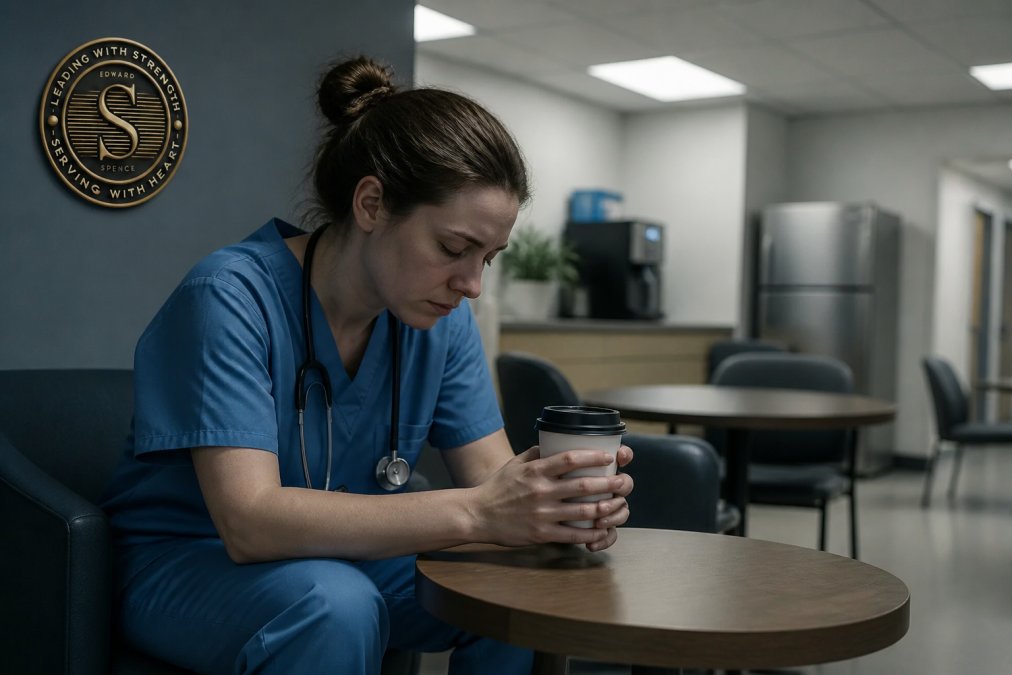
Early warning signs cluster in three areas:
Cognitive: Difficulty concentrating, increased errors, second-guessing automatic decisions, persistent mental fog.
Emotional: Disproportionate irritability, emotional blunting, reduced satisfaction from rewarding outcomes, growing sense that nothing you do matters.
Behavioral: Withdrawing from colleagues, increased substance use, skipping meals, abandoning exercise or hobbies, calling in sick more frequently.
Behavioral signs often appear last and are noticed by others first. By then, emotional exhaustion has usually built for months.
A common mistake is waiting for dramatic breaking points before seeking support. Healthcare loses experienced clinicians not from single catastrophic events but from unaddressed accumulation.
How Burnout Affects Patient Safety and Your Career
Burnout is not contained to the individual. According to research published in the Agency for Healthcare Research and Quality's resources on clinician wellbeing, there is a well-documented relationship between clinician burnout and adverse patient outcomes, including increased medical errors, lower patient satisfaction, and higher rates of healthcare-associated complications.
Chronic stress impairs attention, working memory, and decision-making. A physician or nurse operating under sustained emotional exhaustion is cognitively compromised in ways difficult to self-assess. This is physiology, not character failure.
For your career, long-term effects are serious. Staff retention is directly tied to burnout rates. Many experienced clinicians leave direct patient care, move to administration, or exit the profession within years of peak performance.
The earlier you address burnout, the more options you have. A structured recovery process started in early stages looks very different from rebuilding after complete professional collapse.
Nervous System Regulation for First Responders and Medical Staff
You cannot think your way out of a dysregulated nervous system. Insight helps. Coping strategies help. But if your body is stuck in chronic stress response, cognitive approaches alone have limited reach.
Years of high-stakes calls and trauma exposure train the nervous system to stay on high alert. Over time, that state becomes baseline. Rest starts to feel dangerous.
According to the Substance Abuse and Mental Health Services Administration's guidance on trauma-informed approaches, trauma-informed care recognizes the widespread impact of trauma and integrates that knowledge into practice. For individual practitioners, this means understanding how chronic occupational stress has shaped your nervous system and working with that reality.
Practical Regulation Techniques You Can Use During a Shift
These are evidence-guided techniques that work within clinical constraints.
- Physiological sigh: Two quick inhales through the nose followed by a long exhale through the mouth. This activates the parasympathetic nervous system in under ten seconds.
- Cold water on the wrists: Applying cold water to pulse points for thirty seconds interrupts acute stress response.
- Bilateral stimulation: Slow, alternating tapping on your knees while taking three slow breaths helps shift the nervous system out of freeze or hyperarousal.
- Grounding check: Name five things you can see, four you can hear, three you can feel. This pulls attention back to the present moment.
- Micro-recovery between patients: Even ninety seconds of intentional stillness reduces cortisol accumulation over a shift.
Setting Professional Boundaries Without Guilt
A professional boundary is a clear, consistent limit that protects your capacity to do good work over time. It is not selfishness, it is sustainability.
The guilt accompanying boundary-setting in healthcare is real. Clinical culture often equates self-sacrifice with professional virtue. Saying no to extra shifts, leaving on time, or declining to absorb a colleague's emotional labor can feel like betrayal.
A more useful frame: every time you exceed sustainable capacity without recovery, you borrow from your future patients. The clinician who maintains professional limits is more present, accurate, and compassionate over a career than one who burns out at year seven. science-based recovery methods.
Practical boundary-setting includes:
- Identifying non-negotiables: Sleep, one meal away from screens, one activity unrelated to healthcare. These are maintenance, not luxuries.
- Communicating limits clearly and early: Specific, consistent limits are easier for colleagues and supervisors to respect.
- Separating role from identity: You are a person who practices medicine or responds to emergencies. You are not the role itself.
The goal is not to work less but to recover well enough to sustain the work.
Trauma-Informed Coaching for Medical Staff: A Recovery Roadmap
Trauma-informed coaching for medical staff is not therapy. Coaching does not diagnose or treat mental health conditions. It provides structured educational support, accountability, and evidence-guided tools to help you understand your experience, regulate your nervous system, and move forward with clarity and purpose.

For clinicians who have tried conventional therapy and found it did not translate to their specific occupational demands, a coaching model built around occupational trauma can reach places generalized talk therapy does not.
How the T.R.U.E. North Protocol Supports Recovery
The T.R.U.E. North Protocol is a 25-week structured educational protocol developed specifically for individuals navigating trauma, occupational stress, and burnout. It combines neuroscience education, guided journaling, and grief work within a confidential coaching environment delivered via secure telehealth.
For medical staff, the protocol addresses several layers:
- Nervous system education: Understanding why your body responds as it does removes shame and makes regulation techniques more effective.
- Grief work: Many healthcare professionals carry unprocessed grief for patients lost, for the clinician they expected to be, for the career they imagined. Naming and working through that grief is foundational to recovery.
- Identity reconstruction: Burnout erodes the sense of meaning that drew someone to healthcare. The protocol includes structured work on reclaiming purpose and professional identity.
The T.R.U.E. North Protocol meets people where they are. If calming the nervous system is the first priority, that is where the work begins.
Peer Support and Organizational Interventions
Individual recovery matters. So does the environment you return to. Peer support programs within healthcare organizations are among the most effective interventions for reducing burnout and improving psychological safety across teams.
A well-structured peer support program trains staff to recognize burnout in colleagues, creates low-barrier pathways to confidential support, and normalizes help-seeking within workplace culture. Organizational support also includes examining systemic stressors: administrative burden, staffing ratios, scheduling practices, and whether leadership models sustainable work habits.
A Post-Burnout Recovery Roadmap: Steps to Move Forward
Recovery from burnout is not linear or quick. Most people need months, not weeks, to rebuild capacity. That timeline reflects the depth of depletion, not failure.
The following roadmap reflects what a structured recovery process typically looks like.
Phase | Focus | Timeframe |
|---|---|---|
Stabilization | Nervous system regulation, sleep, basic self-care | Weeks 1-4 |
Acknowledgment | Naming the experience, reducing isolation | Weeks 3-8 |
Grief work | Processing loss, patients, identity, expectations | Weeks 6-16 |
Reconstruction | Rebuilding purpose, professional identity, boundaries | Weeks 12-25 |
Sustainment | Long-term practices, peer support, ongoing accountability | Ongoing |
Step 1: Stabilize before you analyze. The nervous system needs to come down from chronic alert before meaningful reflection is possible. Start with regulation techniques, sleep hygiene, and removing the most acute stressors you control.
Step 2: Name what happened. Burnout often exists in vague exhaustion and unnamed loss. Giving it a clear name, this is burnout, this is moral injury, this is grief, is the beginning of accurate self-understanding.
Step 3: Seek structured support. Self-help resources have a role, but overcoming burnout typically requires structured accountability and guidance from someone who understands occupational trauma. That support may be a trauma-informed coach, peer support program, confidential counseling, or a combination.
Step 4: Address the grief. Many clinicians skip this step because it feels indulgent or they are unsure what they are grieving. The grief is real: for patients who did not make it, for early idealism, for the version of yourself before accumulation began. Grief work completes an interrupted process so you can move forward.
Step 5: Rebuild with intention. Recovery is not returning to who you were before burnout. It is building something more sustainable, including revisiting professional boundaries, your relationship to work identity, and self-care strategies that will carry you through the next decade.
According to the National Academy of Medicine's Action Collaborative on Clinician Well-Being and Resilience, addressing clinician burnout requires attention at both individual and organizational levels. Neither alone is sufficient. Your recovery can begin with steps you take personally while advocating for systemic changes your workplace needs.
Overcoming burnout for medical staff is not about becoming a different person. It is about reclaiming the person and clinician you already are, with tools and support to sustain that over time.
Healthcare professionals carry more than most people will ever understand. If you recognize your own experience in this guide, you do not have to figure out the next step alone. Spence's True North offers confidential, trauma-informed coaching through the structured 25-week T.R.U.E. North Protocol™, delivered via secure telehealth and designed specifically for the occupational realities of medical staff, first responders, and those carrying the weight of chronic stress and unprocessed trauma. A sliding scale is available so that finances are not a barrier. Schedule a free initial consultation and take the first step toward reclaiming your life and your purpose.
Frequently Asked Questions
What are the early warning signs of burnout in healthcare professionals?
Early signs of healthcare worker burnout include persistent emotional exhaustion that sleep does not fix, growing detachment from patients or colleagues, reduced sense of accomplishment, frequent irritability, and difficulty concentrating during routine tasks. Physical symptoms such as recurring headaches, disrupted sleep, and getting sick more often also appear early. Recognizing these signs before they become entrenched is one of the most important steps in overcoming burnout for medical staff before it affects patient safety or your health.
Can medical staff recover from burnout without leaving their profession?
Yes. Many healthcare professionals recover from medical staff burnout while continuing to work. Recovery typically involves addressing both individual stressors and systemic ones: setting clearer professional boundaries, learning nervous system regulation techniques, reducing administrative burden where possible, and accessing confidential support such as trauma-informed coaching or peer support programs. Leaving is sometimes the right choice, but it is not the only path. Structured support, like the T.R.U.E. North Protocol, is designed to help people move forward without requiring them to abandon the work they care about.
How does trauma-informed coaching differ from therapy for medical staff burnout?
Trauma-informed coaching for medical staff focuses on education, skill building, nervous system awareness, and forward movement rather than diagnosing or treating mental health conditions. It is not psychotherapy or psychiatric care. Coaching helps you understand how chronic occupational stress affects your body and behavior, then guides you through practical steps to rebuild resilience and reclaim your sense of purpose. If clinical mental health treatment is needed, a qualified coach will say so and help you find appropriate resources.
How long does it take to recover from healthcare worker burnout?
Recovery timelines vary depending on how long burnout has been present, what systemic stressors remain, and what support is in place. There is no universal timeline, and no ethical coach or provider should guarantee specific results or timeframes. Structured programs like the 25-week T.R.U.E. North Protocol offer a consistent framework, but individual progress depends on personal commitment, circumstances, and the nature of the burnout. Starting with a free consultation is a good first step to understand what a realistic path forward looks like for your situation.